
In a sign of the expanding Apple supplier ecosystem in India, American multinational Jabil Inc will set up an electronics manufacturing facility in Tiruchirappalli, Tamil Nadu with an investment of Rs 2,000 crore. Jabil is one of the 14 Apple suppliers in India, of around 200 globally, while another 14 have reportedly received preliminary clearance to form joint ventures with Indian companies to set up facilities. Interestingly, of the 14 existing manufacturing units in the Apple supply chain, seven are already in Tamil Nadu.
Indian benchmark indices Sensex and Nifty rebounded in early trade after three days of decline, driven by a rally in Sun Pharma following its USD 11.75 billion acquisition of US-based Organon & Co, alongside a positive trend in global equity markets.

Indian benchmark equity indices, Sensex and Nifty, rebounded on Wednesday, recovering intraday losses, primarily driven by strong fag-end buying and a significant rally in blue-chip Reliance Industries.

Tata Group is set to become India's first homegrown iPhone maker after Taiwan's Wistron Group agreed to sell a plant in Bengaluru to India's largest conglomerate. Wistron's board approved the sale of Wistron InfoComm Manufacturing (India) Private Ltd to Tata Electronics for $125 million, the Taiwanese electronics manufacturer said in a statement on Friday. The unit operates an iPhone assembly plant near Bengaluru.
Sensex gains over 400 points while Nifty trades above 23,800 amid strong IT sector buying.

Indian investors have seen their wealth erode by a staggering Rs 16.77 lakh crore over four trading sessions, as the markets faced deep losses driven by elevated crude oil prices, geopolitical tensions, persistent foreign fund outflows, and a record-low rupee.

Indian equity benchmark indices, Sensex and Nifty, tumbled nearly 2 per cent for the fourth consecutive session, driven by elevated crude oil prices, escalating US-Iran tensions, unabated foreign fund outflows, and a depreciating rupee.
Indian equity benchmark indices, Sensex and Nifty, tumbled nearly 2 per cent for the fourth consecutive session, driven by elevated crude oil prices, escalating US-Iran tensions, unabated foreign fund outflows, and a depreciating rupee.

India's first trillion-dollar company will be built on technology it owns, not just operates, predicts Ajay Kumar.

Indian benchmark equity indices, Sensex and Nifty, closed lower due to investor caution over rising bond yields, a weaker rupee, and fresh fuel price hikes, which have revived inflation concerns.

Andhra Pradesh has launched India's first quantum reference facility, aiming to build a sovereign hardware ecosystem and boost indigenous manufacturing of advanced computing systems.
Indian benchmark indices, Sensex and Nifty, opened lower on Tuesday, driven by a surge in global crude oil prices and continued outflows by Foreign Institutional Investors (FIIs), reflecting fragile market sentiment influenced by external factors.
Indian benchmark stock indices Sensex and Nifty rebounded nearly 1 per cent, snapping a three-day decline, driven by rallies in Reliance Industries and Sun Pharma, alongside positive global market trends and easing geopolitical tensions.

'The facility works on Apple's iPhone and everything is damaged -- CNC machines, computers and CCTVs worth crores.'
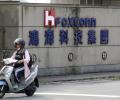
A day after news emerged that Foxconn Technology Group was "forced" by Beijing to send back its Chinese engineers and technicians from its Tamil Nadu plant, sources indicate that the global electronics giant has already drawn up an alternative plan to rescue its India iPhone 17 production by bringing in experts from mainly Taiwan and the US.

Indian equity markets experienced a significant downturn as geopolitical tensions in West Asia, rising oil prices, and foreign fund outflows dampened investor confidence. The Sensex and Nifty both fell sharply in early trade, reflecting broader global market weakness.

Indian equities on Dalal Street saw volatility as global market trends and fresh tariff concerns linked to Donald Trump impacted investor sentiment. Track Sensex, Nifty50 movement and key market drivers for April 9, 2026.

Indian benchmark stock indices Sensex and Nifty rallied for the second consecutive day, closing nearly 1 per cent higher, driven by gains in metal and auto sectors and positive global market trends.

India's smartphone exports have set a new benchmark, surging past the $2 billion mark in October - the highest monthly total ever recorded. This milestone, according to estimates from the Indian Cellular and Electronics Association (ICEA), an industry body representing both global and domestic mobile device manufacturers, underscores the country's growing prominence in global mobile supply chains.
Indian stock markets recovered from early losses to close higher, driven by value buying in IT and banking shares and a rebound in the rupee.
Indian equity benchmarks, Sensex and Nifty, ended lower after a spectacular rally, with the Sensex tumbling 931 points, as renewed tensions in West Asia, particularly the risk to the ceasefire deal after Iran closed the Strait of Hormuz, dampened investor optimism.
Indian stock market benchmarks Sensex and Nifty rebounded by over 1% on Monday, driven by value-buying in banking stocks after a three-day slump. Key gainers included UltraTech Cement, HDFC Bank, and Mahindra & Mahindra.
Indian benchmark indices Sensex and Nifty experienced a sharp decline in early trading due to escalating tensions in the Middle East, driving crude oil prices higher. Global market bearishness and foreign fund outflows further contributed to investor unease.
Indian markets on Dalal Street rallied sharply as easing tensions in the US-Iran conflict and stable oil prices boosted sentiment. Track Nifty 50 and BSE Sensex performance and key global triggers.

Equity benchmark indices Sensex and Nifty ended higher in highly volatile trade on Tuesday, buoyed by heavy buying in bank and metal stocks, a firm trend in global markets and optimism over India-EU FTA. The 30-share BSE Sensex climbed 319.78 points, or 0.39 per cent, to settle at 81,857.48.

The government's target of hitting $52 billion to $58 billion in mobile phone exports in FY26 has been faltering; an Indian corporate group with financial muscle will help.

Indian equity markets closed higher, driven by gains in PSU bank, auto, and financial stocks, following the US Supreme Court's decision on tariffs. Sensex climbed 479.95 points to 83,294.66, and Nifty advanced 141.75 points to 25,713.

Bharat Electronics, Power Grid, NTPC and HDFC Bank were among the other major gainers. However, Infosys, Tata Steel, Eternal and Tech Mahindra were among the laggards.
Indian equity markets experienced a volatile session, with the Sensex and Nifty recovering some ground after a significant plunge the previous day. Gains were driven by PSU bank, IT, and metal stocks, but concerns over rising fuel prices and geopolitical tensions limited the recovery.
Benchmark equity indices Sensex and Nifty rebounded on Thursday after three sessions of losses, tracking gains in global markets after US President Donald Trump struck a conciliatory tone on Greenland. In a volatile session, the 30-share BSE Sensex climbed 397.74 points, or 0.49 per cent, to close at 82,307.37.
Benchmark equity indices Sensex and Nifty extended their gains for the second straight session on Monday, driven by optimism over the India-US trade deal and robust buying in public sector banks, consumer durables, and realty stocks.
Benchmark equity indices Sensex and Nifty tumbled more than 1 per cent on Friday due to across-the-board selloff, especially in metal, IT and commodity stocks, tracking sluggish global markets.

Indian equities on Dalal Street saw volatility as global market trends and fresh tariff concerns linked to Donald Trump impacted investor sentiment. Track Sensex, Nifty50 movement and key market drivers for Feb 24, 2026.
Equity benchmark indices Sensex and Nifty experienced a significant decline, primarily driven by a selloff in IT stocks due to concerns about AI disruption and renewed worries over global trade.
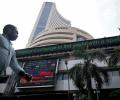
Benchmark stock indices Sensex and Nifty closed on a flat note in a choppy session on Wednesday as gains in PSU banks and auto shares were offset by losses in IT stocks.

Benchmark stock indices Sensex and Nifty dived sharply by nearly 2 per cent on Sunday after Finance Minister Nirmala Sitharaman proposed a hike in the Securities Transaction Tax (STT) on derivatives. Reversing the early gains, the 30-share BSE Sensex plunged sharply by 2,370.36 points or 2.88 per cent to slide below the 80,000-mark at 79,899.42 in afternoon trade as the finance minister announced a hike in STT on futures contracts to 0.05 per cent from the current 0.02 per cent.

Tata Sons' dividend from Tata group companies for last financial year is expected to show a decline of 3.5 per cent to Rs 36,514 crore from Rs 37,832 crore a year earlier. This should be the first year-on-year decline in Tata Sons' dividend in the last nine years. The holding company had last reported a decline in FY16, when its proceeds had gone down 42.5 per cent to Rs 6,898 crore from Rs 11,993 crore a year earlier.
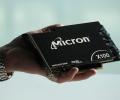
Prime Minister Narendra Modi inaugurated Micron Technology's semiconductor plant in Sanand, Gujarat, highlighting India's growing presence in the hardware sector and its strong partnership with the United States in AI and chip technologies.
Market sentiment is likely to remain cautious as investors position themselves for the upcoming Union Budget and the US Fed's interest rate decision, where expectations are muted.
From the 30-Sensex firms, Larsen & Toubro, Tech Mahindra, Tata Consultancy Services, Reliance Industries, Tata Steel, and Trent were among the biggest laggards. On the other hand, Eternal, ICICI Bank, Bajaj Finance, and Bharat Electronics were the gainers.
